Gardnerella Test
- Lab test with high level of accuracy
- Treatments included
- Fast results within 36 hours
- Discreet packaging
Bacterial Vaginosis
Bacterial Vaginosis (BV) is an infection, which can be caused by a number of bacteria, including Gardnerella Vaginalis. Women with BV will have an altered PH balance in their vagina, which is more alkaline than normal.
Symptoms of Bacterial Vaginosis
Women who have this infection will often develop a discharge that is greyish in colour and has a foul, fishy odour. The discharge may increase after having sex or around the time of menstruation. BV is not normally accompanied by any vaginal soreness or itching.
Is Bacterial Vaginosis sexually transmitted?
BV is not a sexually transmitted infection, although it is most common amongst women who are sexually active; those who started having sex at a young age and the incidence does tend to rise in correlation with the number of sexual partners that they have had in their lifetime.
BV is caused by a change in the balance of naturally occurring bacteria in the vagina and the reason for this happening is not well understood.
Men can have a colonisation of Gardnerella in their urethra but it does not generally cause any symptoms and they do not necessarily need to be treated. Gardnerella is not considered to be a sexually transmitted infection but it is not clear if Gardnerella can be passed from males to females during intercourse. Current UK guidelines recommend not treating male patients for Gardnerella Vaginalis.
Can I be tested and treated for Bacterial Vaginosis?
The STI Clinic can provide a vaginal swab test for BV and treatment can be prescribed if there is a positive result. Please note that the Gardnerella Vaginalis PCR test is no longer advised - please choose the Vaginitis Screen instead.
Should I be worried about Bacterial Vaginosis?
Generally, BV is nothing to worry about and around 1 in 3 women will experience symptoms of Bacterial Vaginosis at some point in their lives. If you are pregnant then there is a risk that BV can cause early labour and babies of low birth weight. There is also a risk of infection following a termination of pregnancy or other operations such as a hysterectomy.
Can I do anything to reduce the incidence of BV?
We have the following advice for people who suffer from BV on a regular basis:
- Do not use a douching method to clean your vagina as this can lead to the disturbance of the bacterial balance that causes BV.
- Avoid the use of strong detergents to wash your underwear.
- Do not add antiseptics to bathing water or use scented soap to wash your vagina.
- Avoid washing your vagina too often. Once a day is sufficient.
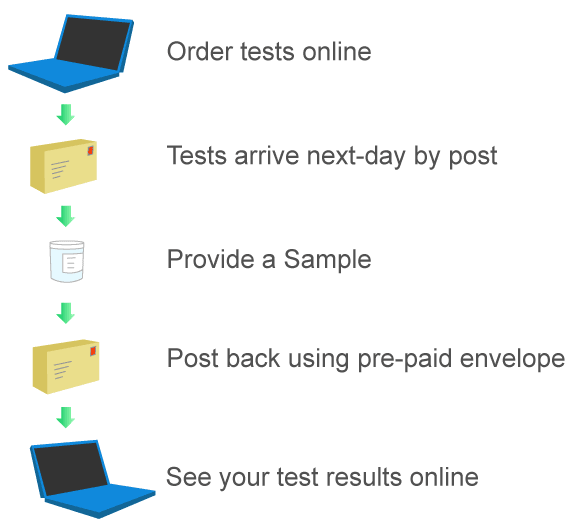
How Our Service Works
- Order your
STI test online
- Discreet package
arrives next day
- Provide a sample and post in pre-paid envelope
- Access results online
Gardnerella Test
- Order by 3.00pm Monday to Friday for next day delivery