Gonorrhoea
What is Gonorrhoea?
Gonorrhoea is a bacterial infection that can affect the urethra, vagina, rectum,
throat and eyes. If left untreated, Gonorrhoea can spread to the blood and joints,
causing serious health problems. Gonorrhoea is passed through sexual contact.
Gonorrhoea Symptoms
Men
Around 95% of men will develop symptoms with gonorrhoea within 2 – 7 days. It can
take up to 30 days for symptoms to appear but this is unusual. Given that 95% of
men develop symptoms, this means that 5% will have the infection and show no
noticeable outward signs. Where symptoms do develop, they include:
- Discharge from the urethra
- Pain on urination
- Burning sensation in the urethra
Women
Only around 50% of women infected with Gonorrhoea will have noticeable symptoms so half
of those infected may not know that there is anything wrong. Where symptoms do develop,
they include:
- Unusual vaginal discharge
- Painful urination
- Burning sensation or irritation in the vagina and urethra.
Both men and women can have Gonorrhoea in other parts of the body other than the
genitals. Other symptoms include:
- Red and painful eyes if the gonorrhoea has infected the eyes
- Sore throat in the case of pharyngeal Gonorrhoea
- Anal discharge and itching where the infection is in the rectum.
Getting Tested
Testing for Gonorrhoea can be done through a variety of methods. We can provide
tests for home sample collection. We can test for gonorrhoea only or we can test
for a variety of infections from one sample. We have a rapid test with results
in under 4 hours. Our standard Gonorrhoea test takes around 24 hours to
complete. You can see the full test options here.
Choosing a test
If you have any urethral or vaginal symptoms then we recommend the full screen.
If you have any symptoms in the throat or rectum then we have a screen called
MSM that might be appropriate for you. You can navigate to the relevant page
here.
Gonorrhoea Treatment
The recommended front line treatment is an intramuscular injection of
Cefriaxone accompanied by a single oral 1000 mg dose of Azithromycin. Where
the intramuscular injection is not possible then that element of the treatment
can be substituted with 400 mg oral Cefixime. Any sexual partner should be
treated at the same time and recent sexual partners notified. We have an
anonymous partner notification service that enables you to avoid an awkward
conversation with a recent sexual partner.
Retesting
Because of acknowledged antibiotic resistance, it is recommended that you
get retested no earlier than 3 weeks after you take the medication. It is
advised that you abstain from sex until you have a negative test result.
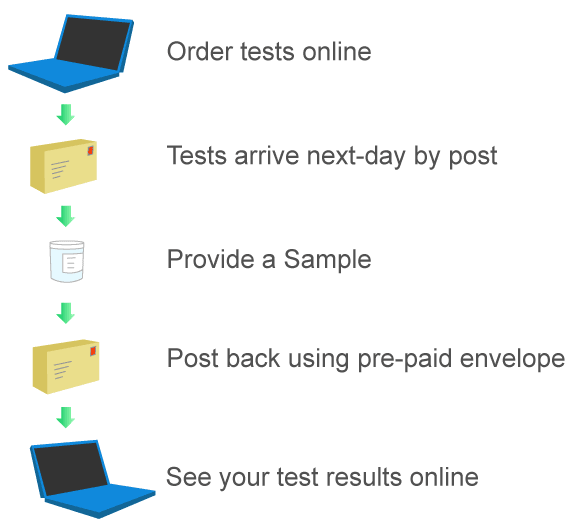
How Our Service Works
- Order your
STI test online
- Discreet package
arrives next day
- Provide a sample and post in pre-paid envelope
- Access results online
Gonorrhoea Test
- Order within
-
HrsMinsSecs
- for next day delivery